 World Connect News
[ad_1]
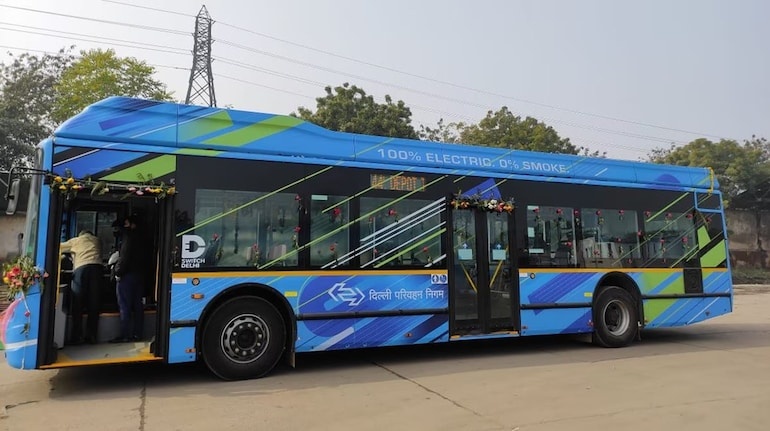
The Delhi government has taken a big step towards making public transport in the national capital Delhi eco-friendly, modern and safe. 200 new modern electric buses have been included in Delhi’s transport fleet. The most special thing about this new extension is that 56 of these special bus services are being run as ‘Ladies Special’ dedicated to working women and girl students. With this, the total fleet of Delhi Transport Corporation (DTC) has increased to approximately 6,800, which includes 4,938 fully electric buses.
56 ‘Ladies Special’ bus services for women and girl students
Keeping in mind women’s safety and ease of travel, Delhi Government has decided to start 56 Ladies Special Bus services on 28 major routes.
These 56 services are divided into two main categories:
-
High-Demand Routes (30 Trips): 30 Ladies Special trips will be operated on 15 busiest and high-demand routes in the city, connecting residential areas to major office hubs.
-
University Ladies Special – U-SPL (26 Trips): 26 ‘University Ladies Special’ trips will be run on 13 special routes for Delhi University (DU) and other higher educational institutions.
Which colleges of DU will get direct connectivity?
With the introduction of University Ladies Special (U-SPL) services, girl students of many major colleges under the North and South Campus of Delhi University will get direct daily commuting facility. The route of these buses has been prepared in such a way that last-mile connectivity of the colleges from metro stations and bus stands can be ensured.
These major colleges will get direct benefits:
-
North Campus: Hindu College, Ramjas College, Kirori Mal College, Hansraj College, Daulat Ram College and Shri Ram College of Commerce (SRCC).
-
South Campus and other colleges: Lady Shri Ram College (LSR), Gargi College, Deshbandhu College, and Syama Prasad Mukherjee (SPM) College.
With the running of these special buses, girl students will get relief from crowding during peak hours and they will be able to reach college safely and in a timely manner.
Residential areas will be connected to major employment and government centers
For the convenience of working women, Ladies Special buses will be directly connected to major business, institutional and government centers of the capital.
Major centers included are:
-
Connaught Place (CP), Shivaji Stadium and Karol Bagh
-
Nehru Place, South Extension and RK Puram
-
All India Institute of Medical Sciences (AIIMS)
-
ITO, Delhi Secretariat and Kashmiri Gate
Design, safety features and modern facilities of buses
The 200 new electric buses inducted include 88 12-metre long standard low-floor buses and 112 9-metre long mini electric buses (DEVI Buses) for narrow roads and local routes.
Key Security and Technical Features:
-
Low-floor and air-conditioned (AC): Fully air-conditioned and ease of boarding and de-boarding due to low height platform.
-
Hi-Tech Security: The buses are fitted with high-definition CCTV cameras, live GPS tracking and panic buttons for emergencies.
-
Accessibility for disabled people: Wheelchair ramps, special reserved seats, and audio-visual display boards are available.
-
Special Identification: Special stickers have been installed on Ladies Special buses so that women can easily identify them from a distance.
Inter-state e-bus on Delhi-Karnal route and new charging station at Rajghat
Under this initiative, Delhi Transport Corporation has also expanded interstate connectivity. 5 new air-conditioned electric buses have been introduced on the 133 km long route between Kashmiri Gate ISBT to Karnal in Haryana, which will make a total of 10 trips in both directions daily. This bus will reach Karnal via Murthal, Samalkha, Panipat and Gharaunda.
Along with this, for smooth operation and quick charging of electric vehicles, a high-power public EV charging station with 240 kW capacity, built at a cost of ₹ 5.50 crore, has also been started at Rajghat Depot-1. The transport department aims to take the total number of electric buses in the capital to 14,000 by the year 2028-29, thereby making Delhi the cleanest and modern public mobility capital of the country.