 World Connect News
[ad_1]
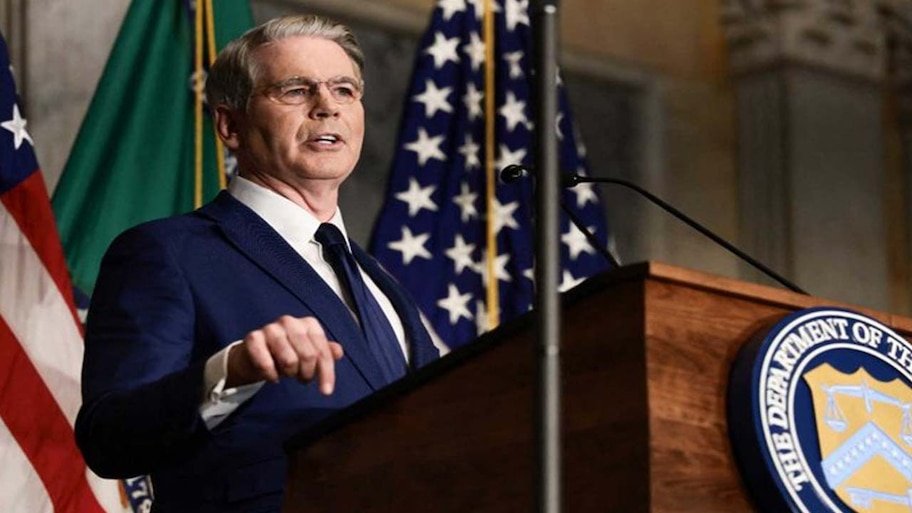
The war between the US and Iran has now reached its most aggressive financial and economic front amid the ongoing military confrontation and diplomatic deadlock in West Asia. Having failed to subdue Tehran even after military operations and port blockade, Washington has now openly announced to completely cut off its last economic lifeline. Launching ‘Operation Economic Outcast’ on a global scale, US Treasury Secretary Scott Besant has bluntly warned countries around the world to immediately break all their trade and financial ties with Iran, otherwise they will be completely ousted from the US dollar-based banking system.
Immediately after the American announcement, Tehran has also adopted an aggressive stance and made it clear that it is fully prepared to give a befitting reply to this “economic terrorism” of America.
America’s ‘Economic D-Day’: New restrictions on 5 major sectors and 60 institutions
According to the official announcement issued by the US Treasury Department, the most comprehensive financial blockade ever launched against Iran on the instructions of President Donald Trump:
-
5 important sectors on target: America has identified 5 major sectors supporting Iran’s economy –Digital Assets (Crypto), Technology, Gold, Aviation and Shipping (Marine Transportation)—are directly targeted.
-
Action on 60 institutions: Immediate sanctions have been imposed on about 60 companies, ships and individuals associated with Iran’s missile, nuclear, cyber and shadow-fleet (illegal oil tanker network).
-
Ultimatum to global countries: Scott Besant said that America has prepared a map of all the financial channels of Iran and every country of the world is being given a defined timeline so that they completely stop all transactions and oil purchases related to Iran.
The US Finance Minister said in a warning tone, “Our clear goal is to cut off every single economic lifeline that supports Tehran so that the regime is completely isolated. Any bank or institution found to be involved in money laundering or oil smuggling to Iran will be locked out of the US dollar system. No one is above the scope of our sanctions.”
Iran’s sharp counterattack: ‘Our stance is no longer defensive, the enemy should be ready to attack’
The Iranian leadership has given a strong and bold response to the new web of economic sanctions laid by the US:
-
Statement by Iranian Finance Minister: Iran’s Economy Minister Ali Madanizadeh said on state television, “We are fully prepared to deal with US sanctions. Naturally the enemy wants to launch an economic terrorist attack on us, but we also have our own effective weapons and we know how to play this game well. Our stance is no longer merely defensive; the enemy must be prepared for our counter-strike.”
-
IRGC’s open warning: Islamic Revolutionary Guard Corps (IRGC) spokesman Brigadier General Hussein Mohebbi said that if the US tried to damage Iran’s infrastructure or energy networks, a heavy and devastating blow would be inflicted on all important ‘energy chokepoints’ and US strategic bases in West Asia.
-
President Pejeshkian’s stance: During peace talks in Tehran with Pakistani Army Chief Asim Munir, Iranian President Masoud Pejeshkian said that America will have to change its tone and attitude in talking to Iran. Bullying and economic pressure will only complicate the situation, not solve it.
Challenges of the global energy market and key partners
Experts believe that even though America is announcing sanctions, it will not be easy to implement it completely. Over the past several decades, Iran has mastered the art of surviving under international sanctions and doing business through parallel banking and third countries.
Additionally, if the United States risks imposing secondary sanctions directly on entities in major global economies such as China, India, or Turkey, it could cause significant disruption to the global financial system and oil supplies. This new economic conflict, amid already existing tensions in the Strait of Hormuz and crude oil prices reaching record levels, is pushing the world towards a new great crisis.