 World Connect News
[ad_1]
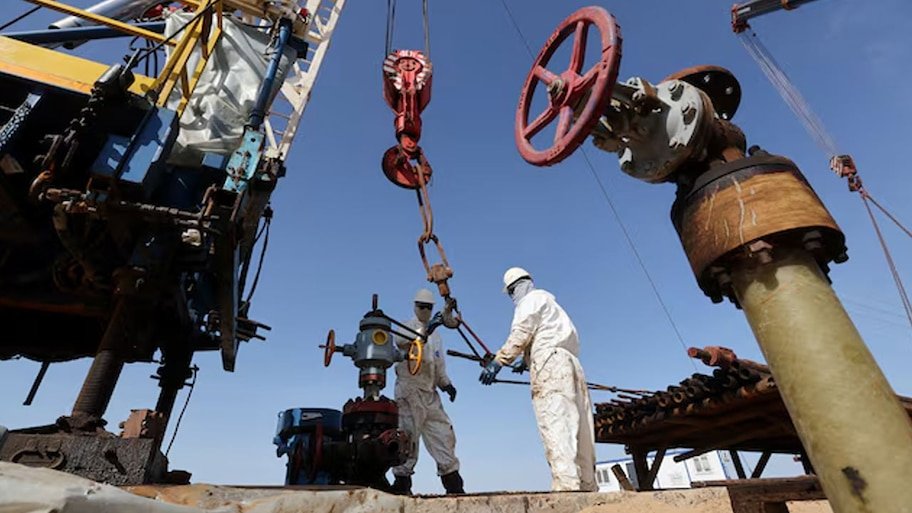
The geopolitical crisis in Middle East Asia has once again reached its peak. There is huge turmoil in the global energy market due to military attacks and maritime confrontation between America and Iran. In the latest development, following the news of attacks on ships and oil tankers, the prices of international standard Brent crude jumped to cross the level of $ 96 per barrel, while American West Texas Intermediate (WTI) crude is also trading near $ 92 per barrel. The fear of supply disruption in the Strait of Hormuz, the world’s most strategically important oil transportation route, has increased the concern of oil traders and energy importers around the world.
Energy experts believe that if this conflict between Washington and Tehran prolongs, then crude oil prices may soon cross triple digits i.e. the psychological level of $ 100 per barrel. About 20 percent of the world’s oil consumption passes through the Strait of Hormuz. Any kind of military blockade or naval blockade on this route could seriously disrupt the global supply chain. Due to this geopolitical risk premium, the prices of internationally refined fuels such as diesel and gasoline are also seeing a strong rise.
Amidst the stormy rise in international crude oil prices, Indian oil marketing companies—Indian Oil Corporation (IOCL), Bharat Petroleum Corporation Limited (BPCL) and Hindustan Petroleum Corporation Limited (HPCL)—have updated the new retail rates of petrol and diesel across the country at 6 am today. Although there is huge volatility in the international market, at the domestic level, government oil companies have kept the retail prices stable in major metros for the time being without giving any shock to the common consumers.
In the country’s capital New Delhi, petrol is being sold at around Rs 94.72 per liter and diesel at Rs 87.62 per liter. In the financial capital Mumbai, due to local VAT and Municipal Corporation Cess, petrol remains at Rs 104.21 per liter and diesel at Rs 92.15 per liter. In Kolkata, petrol is stable at Rs 103.94 and diesel at Rs 90.76 per liter, while in Chennai the price of one liter petrol is recorded at Rs 100.75 and diesel at Rs 92.34 per liter. In Lucknow, the capital of Uttar Pradesh, petrol is available at Rs 94.65 and diesel at Rs 87.76 per liter.
India imports more than 85 percent of its total domestic crude oil requirements from abroad. In such a situation, the cost of crude oil in the international market presents a double challenge for the Indian economy. Whenever crude oil prices rise by one dollar per barrel, India’s oil import bill increases by billions of dollars. This has a direct impact on the country’s current account deficit (CAD) and foreign exchange reserves, which also puts pressure on the Indian rupee against the US dollar.
The biggest danger of crude oil becoming expensive comes from retail inflation. Diesel is the backbone of freight and public transport in the country. If domestic companies revise the retail prices of petrol and diesel in future in view of the global rise in crude oil, the transportation cost of fruits, vegetables, food grains and daily essential commodities will increase. Apart from this, there may be a huge jump in the production cost of petrochemical, tyre, paint, plastic and fertilizer industries, the ultimate burden of which will fall on the pockets of the general public.
In India, the prices of petrol and diesel are reviewed daily (Dynamic Fuel Pricing System) every morning at 6 am. The refinery gate price is decided based on international benchmark prices and the average of the last 15 days of the US dollar-rupee exchange rate. After this is added the Central Excise Duty (Excise Duty) imposed by the Central Government, Dealer Commission and then Value Added Tax (VAT) charged by each State Government.
This is the reason why there is a big difference in the prices of petrol and diesel from state to state in the same country. In states where VAT rates are high, fuel remains above Rs 100 per litre, while in low tax states and union territories, fuel prices are relatively lower. For some time now, Indian refinery companies have been trying to reduce the impact of this global boom by purchasing crude oil at discounted rates from alternative sources like Russia, but the worsening situation in West Asia may upset this balance.
Consumers can get information about daily changing prices of petrol and diesel sitting at home by just sending an SMS. Oil companies have started digital and SMS services to ensure transparency.
If you are an Indian Oil (IOCL) customer, send ‘RSP Dealer Code’ to 9224992249 from your mobile. BPCL customers can SMS ‘RSP Dealer Code’ to 9223112222. HPCL consumers can know the most accurate and latest price of their nearest petrol pump by typing ‘HPPRICE Dealer Code’ and sending it to 9222201122. Apart from this, real-time rates can also be seen by visiting the official mobile applications of the respective companies.