 World Connect News
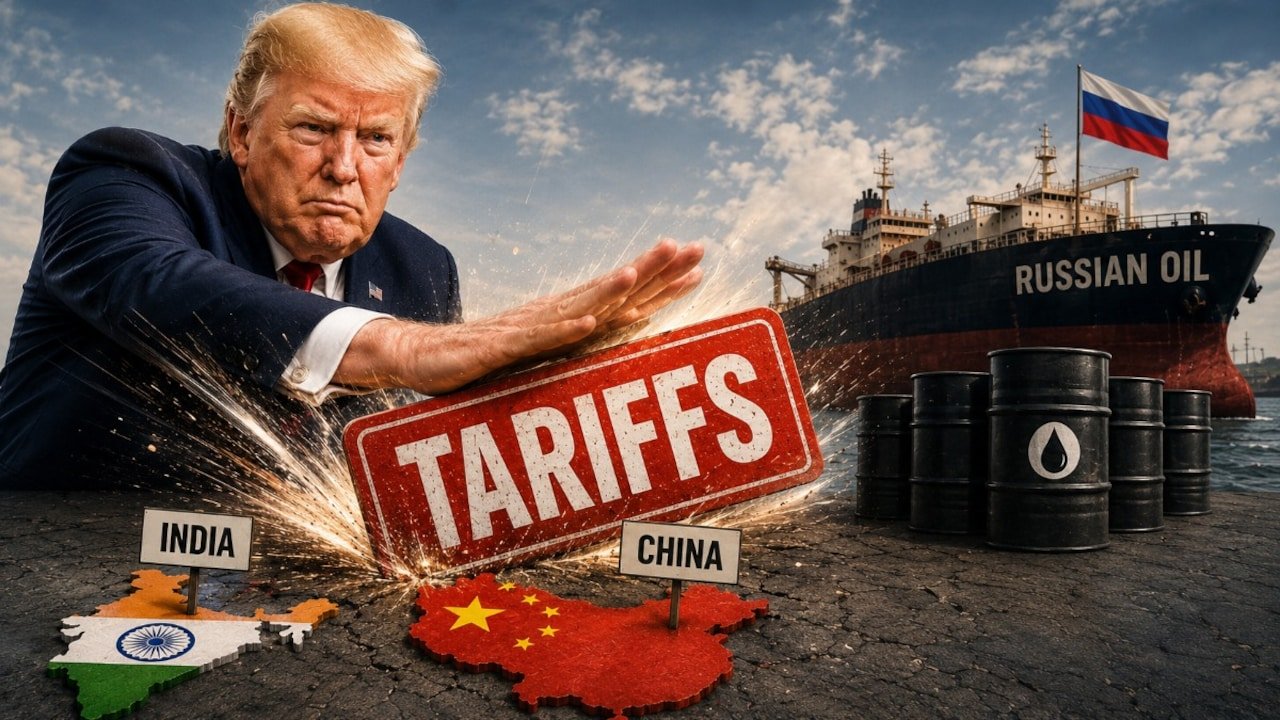
The United States House of Representatives has officially approved sweeping secondary sanctions legislation that grants President Donald Trump sweeping authority to impose tariffs of up to 100% on countries purchasing significant volumes of Russian crude oil and natural gas. Titled the Lindsey O. Graham Sanctioning Russia and Iran Act of 2026, the legislation cleared the chamber floor in a 262-159 vote following strong Senate approval. Now awaiting the President’s signature to become federal law, the bipartisan measure equips the White House with an aggressive economic tool that directly impacts major global energy buyers, including India and China.
Cracking Down on Shadow Fleets and Tehran
The legislation targets Russia’s energy supply channels by establishing strict punitive measures against maritime vessels in Moscow’s “shadow fleet,” which have consistently circumvented Western oil price caps. In addition to targeting Russian defense conglomerates, oligarchs, and state-backed financial institutions, the bill reauthorizes and deepens secondary restrictions on Iran under a five-year extension of the Iran Sanctions Act, aiming to choke off revenue networks financing Moscow’s military operations.
Under the statutory mechanism created by the bill, the US Trade Representative will review international trade data every 180 days to identify the five largest global purchasers of Russian hydrocarbons. Countries confirmed as top buyers or identified as hubs facilitating sanctions evasion face discretionary US import tariffs ranging from above zero up to 100%. While the bill does not trigger automated punitive duties, it hands the executive branch legal leverage to penalize energy-importing partners unless they demonstrate verifiable reductions in Russian fossil fuel procurement.
The expansion of executive tariff power faced pushback from House critics and Democratic lawmakers, who warned that vesting broad tariff authority in the presidency risks disrupting allied supply chains and inflaming international trade friction. In New Delhi, officials have consistently maintained that Indian crude procurement remains guided strictly by domestic energy security imperatives for its 1.4 billion citizens. With the bill now on Trump’s desk, global commodity markets and trading partners are closely watching whether the administration will weaponize the newly enacted tariff ceiling.