 World Connect News
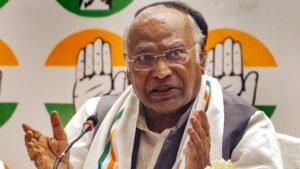
Congress President Mallikarjun Kharge launched a blistering attack against Prime Minister Narendra Modi, alleging that the central government has surrendered national economic interests under pressure from Washington. Kharge pointed to looming threats of reciprocal duties reaching up to 100 percent on Indian goods, calling it proof of a fundamentally broken foreign and commercial policy that leaves everyday citizens and domestic exporters vulnerable.
Opposition Targets Modi-Trump Chemistry Kharge took sharp aim at the personal camaraderie showcased between Prime Minister Modi and US President Donald Trump during previous mega-events, notably referencing the “Howdy Modi” and “Abki Baar Trump Sarkar” slogans. The Congress chief argued that grand diplomatic optics have yielded no tangible leverage for India, charging that while Washington dictates aggressive trade terms, New Delhi capitulates rather than defending its strategic autonomy.
Threat of Heavy Tariffs Looms Over Indian Exports The confrontation follows declarations regarding sweeping import levies of up to 100 percent aimed at key trading partners, including India. Critical Indian sectors such as pharmaceuticals, textiles, engineering goods, and agriculture remain particularly exposed to any punitive reciprocal tariff framework. Kharge highlighted that competing nations actively negotiate pauses and concessions with American officials, whereas India’s administration appears quick to buckle under retaliatory tariff warnings.
Trade Policy Under Intensifying Scrutiny The Congress party maintains that yielding to unilateral trade pressure compromises local manufacturers, Micro, Small, and Medium Enterprises (MSMEs), and farming communities that rely heavily on competitive market access. Kharge demanded administrative transparency on bilateral trade negotiations, asserting that diplomatic outreach must deliver tangible economic protections for the country’s workforce rather than concessions to foreign economic dictates.