 World Connect News
[ad_1]
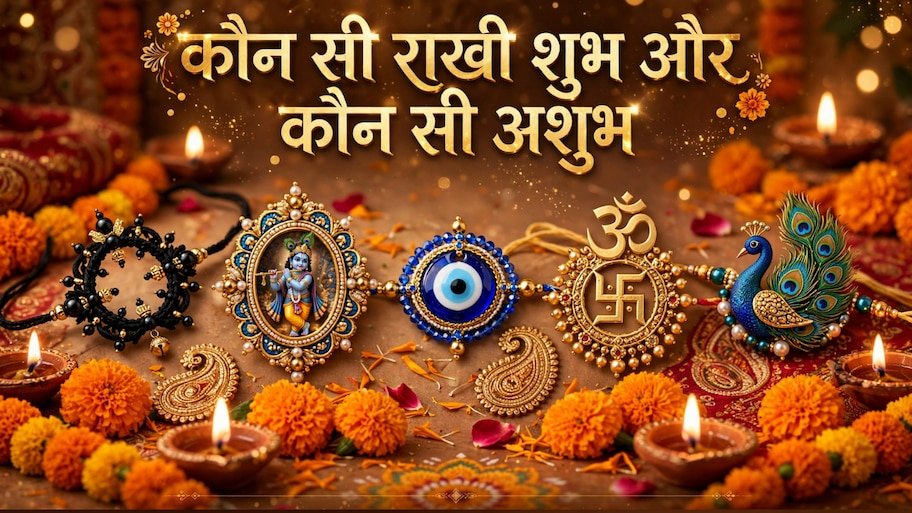
Rakshabandhan, the great festival of unbreakable love and trust between brother and sister, is celebrated with great enthusiasm every year on the full moon date of Shravan month. On the day of Rakshabandhan, sisters tie Rakshasutra on the wrist of their brother, wishing for his long life, happiness, prosperity and progress. These days, countless types of Rakhis made of designer, fancy, cartoon, plastic and metal are available in the market.
However, according to astrology and Sanatan Shastras, Rakhi is not just a decoration item but a sacred Vedic Rakshasutra. Tying a Rakhi with wrong colour, inauspicious symbol or inappropriate design can have a negative impact on the brother’s life.
Which type of Rakhi is considered extremely inauspicious to tie?
-
Black Rakhi (Black Thread): In astrology, black color is considered a symbol of negative energy and vengefulness. It is strictly prohibited to tie Rakhi with black thread or black beads in any auspicious or auspicious event. This can bring tension and discord in the brother’s life.
-
Rakhi with God’s Idol or Picture: Nowadays, Rakhis with small idols and pictures of Lord Ganesha, Shri Krishna, Shivji or Hanuman ji are quite in trend. According to the scriptures, the Rakhi tied on the wrist gets impure during daily routine like washing hands, eating food or sleeping and after some time it breaks and falls off. This causes insult and blame to God.
-
Rakhi with inauspicious and sharp symbols: Many fancy Rakhis have swords, knives, skeletons, crosses or sharp metals attached to them. Such violent and sharp signs promote aggression, anger and accidents in the brother’s nature.
-
Broken or fragmented Rakhi: Do not buy a Rakhi whose thread is torn, beads are scattered or any symbol is broken. Tying a broken object is prohibited in the scriptures.
-
Plastic and Synthetic Materials: Plastic is considered impure. Traditional natural elements should be preferred instead of rakhis made entirely of plastic.
Which Rakhi is considered the most auspicious and fruitful?
-
Rakhi of silk, cotton or Kalava (Mauli): The traditional red, yellow and orange colored Kalava (Mauli) or pure silk thread is considered the most sacred Rakshasutra. It symbolizes the blessings of the Trinity (Brahma, Vishnu, Mahesh) and the Tri-Goddess.
-
Auspicious Vedic Symbols (Swastika, Om, Kalash): If there is any shape on the Rakhi, then keep in mind that it should be the symbol of Swastika, Om, Trishul, Rudraksh or Kalash. This creates a circle of positivity and security in the brother’s life.
-
Silver and Gold Rakhi: Silver is considered to be the factor of Moon and gold is considered to be the factor of Sun and Jupiter. Tying a silver Rakhi keeps the mind calm and removes mental stress.
-
Rakhi with sandalwood and Rudraksh: Tying Rakhi made of genuine Rudraksh or sandalwood on brother’s wrist protects from negative energies, evil eye and diseases.
Keep in mind the direction and mantra while tying Rakhi.
While tying Rakshasutra on Rakshabandhan, brother’s face should always be towards east or north. Before tying Rakhi, decorate the plate with Akshat, Roli, Chandan, lamp and sweets. After applying Tilak, tie Raksha Sutra by placing a handkerchief or cap on your head and recite the mythological mantra of Raksha Sutra:
Yen Baddho Bali Raja Danavendro Mahabalah.
Ten Tvamanubhadhnami rakshe ma chal ma chal ॥