 World Connect News
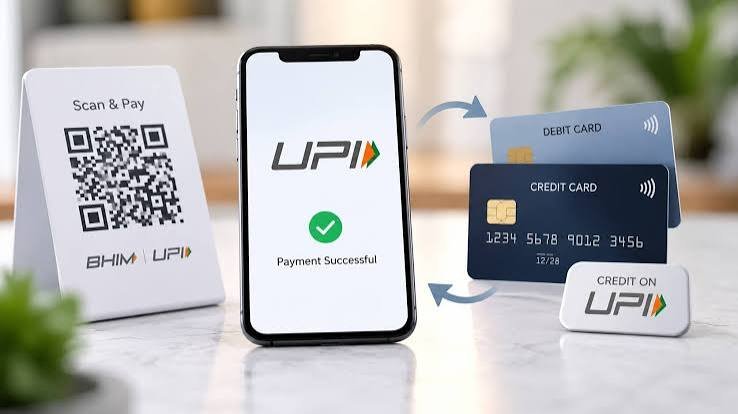
The Union Government has strongly rejected allegations of giving in to external pressure regarding its digital payment policy, clarifying that the newly announced 0.4 percent Merchant Discount Rate (MDR) on select high-value UPI transactions is a calculated domestic policy decision aimed purely at long-term infrastructure sustainability. Rebutting opposition claims that New Delhi bowed to foreign interests, officials emphasized that the move ring-fences everyday users while building a self-reliant digital economy.
Centre Pushes Back Against Opposition Allegations The clarification followed sharp political criticism accusing the government of altering payment regulations under foreign corporate and geopolitical pressure. Ruling officials dismissed these charges as misinformed, reiterating that the policy shift from the 2020 zero-MDR mandate was driven entirely by domestic economic considerations. Authorities pointed out that financial institutions, banks, and payment aggregators had consistently highlighted the operational cost of managing billions of transactions annually, making a revenue-generating model essential to maintain system integrity.
Targeted MDR on High-Value Merchant Payments Under the revised framework taking effect from October 15, 2026, a 0.4 percent fee will apply exclusively to Person-to-Merchant (P2M) payments exceeding Rs 2,000, with a maximum cap set at Rs 300 per transaction. Person-to-Person (P2P) transfers—such as sending money to friends and family—remain completely free of charge. The administration clarified that more than 95 percent of retail UPI transactions fall below the Rs 2,000 threshold, meaning everyday consumer activity will experience zero disruption.
Complete Shield for Consumers and Small Traders To prevent cost inflation for ordinary citizens, banks and payment processors have been legally barred from passing on the MDR expense to end consumers. Additionally, small roadside vendors and neighbourhood shopkeepers earning up to Rs 1 lakh per month through standard QR codes are protected under the zero-MDR Person-to-Person Merchant (P2PM) category. Essential sectors including railways, telecom services, insurance, and fuel will attract a flat fee of just Rs 5 per transaction above Rs 2,000 to preserve price stability in critical public utilities.
Funding Digital Security and Tier-3 Expansion The revenue accrued from the MDR framework will be shared across the payment architecture to support continuous upgrades in cybersecurity, server capacities, and fraud prevention mechanisms. A dedicated portion of the collected funds will be channeled into expanding point-of-sale digital adoption across semi-urban, rural, and Tier-3 markets, ensuring India’s homegrown payments infrastructure remains resilient without burdening general consumers.